1

Francesco Santorelli, a story of revenge in sport and catering

Before starting to tell you this story I want to ask you a question: have you ever tried to socialize with those who live next to you? Obviously I'm talking about true sociability, what so many preach on the web, but that few realize in reality. Yeah… I'm referring to social interactions between people who accidentally find themselves living next to each other, but they don't really know each other, or better, who are often not interested in doing so.

Yet… yeah, yet we live in an era of great virtual connections, and, unfortunately, much less than relationships that presuppose real relationships of knowledge. I am referring to those 'neighborhood ties' that consolidate over time, but above all live, and who often help each other, making you less alone, who alone often comes to find themselves for the circumstances of life. Without a doubt the frenzy of our times, fears and mistrust, they do not facilitate live social relationships. In this fast digital age, interacting on social networks gives the illusion of greater security, with less risk and interference in our private sphere.

But now I ask you: all at what price? To appear and not to be, fill in gaps without actually living them.

Well, I wanted to make this premise because recently, after yet another change of residence, I found myself in these circumstances: between close and unknown people, that, despite numerous mutual commitments, they decided to change the state of things. Come doctor always, getting to know people and sharing experiences is of great emotion and enrichment. This is why today I want to tell you the story of a young man, in a certain sense 'close to me', which I really appreciated for the strength and determination he showed in winning a great challenge: life and the obstacles it poses to us.

I present to you Francesco Santorelli, athlete from Briantea84.

The beauty is an accomplice in this story‘Mbriana, benevolent spirit bringing serenity and good omen, protector of homes and places where she is welcome. A good fairy born from an ancient Neapolitan legend, who is accompanying Francesco in his new adventure in a different field than usual: that of catering. I already imagine your astonished faces!  Neighborhood ties, spirits, legends ... but what are we talking about you will say?! Be’, I think you are right. Perhaps it is appropriate to start from the beginning…

Francesco Santorelli, class 1992, he was a child like many others in Naples, his hometown, he loved playing football with friends. A sharply shaken childhood at the age of six, after a car accidentally hit him on the street, causing him a serious motor disability. A traumatic event that, after the consequent adaptation difficulties, he gave away his second life. Family support is essential, his determination is essential, but above all his desire to socialize. In fact, after some individual sport experiences, the need for team spirit led him to choose wheelchair basketball. Initially with Ciss Napoli, then, after the call to Brianza, land to which he moved permanently, con la Briantea84, paralympic sports club with which since 2013 to date he has won well 21 trophies.

And the beautiful 'Mbriana you will say? What does all this have to do with it?

Well, Francis, as well as having a passion for team sports, as a good Neapolitan he loves pizza. Not happy with the goals achieved, we wanted to set a new objective: become a restaurateur. A project that triggered something in him, or better, which led him to open a pizzeria in Monza: ‘Mbriana Pizza & Food’. A place inaugurated in January of 2022 together with his cousin Giuseppe Corrado: hotel training in Naples, internship in London, personal realization in Brianza. “You know Cynthia, in Naples I can say that I learned to make pizza, but in London certainly to accept the many hours of work that catering requires.”

Pizzas and treats with selected raw materials from Campania and Brianza, which I tasted and greatly appreciated the evening I went to visit Francesco in his restaurant. In reality, for the two of us, being face to face is very easy. As I wrote, fate wanted Francesco to be in a certain sense 'close to me', or better, I made this premise because choosing and tasting a craft beer requires the right considerations, that he is a good neighbor of mine. Here the mystery is revealed. Neighbors who, despite their many commitments, have decided from time to time to meet and talk about each other, Perhaps, I add, accompanied by a good glass of wine and some specialties purchased during our travels. Small moments of life that make the relationships between the people who happen to live next door special.

It is customary to say that everything that happens to us makes sense. Personally, I firmly believe it. I am convinced that Francesco also believes in it.

Mbriana Pizza & Food – Via Marsala 14, Monza – www.mbrianamonza.it


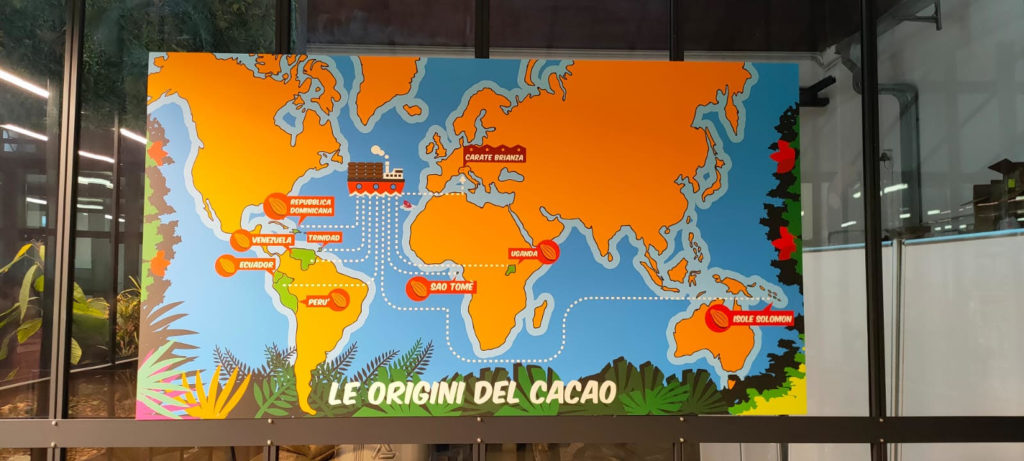
"Making chocolate is an oenologist's business": Marco Colzani, the winemaker-chocolatier from Brianza

My desire to get to know the artisan realities of the area where I live and my love for fruit, it led me to meet Marco Colzani, a craftsman with whom I shared critical issues and many ideas to think about. A Brianza winemaker-chocolatier who loves fruit. Yes, because we always talk about fruit, whether we refer to grapes for the production of wine, than cocoa beans for chocolate. His, a project dreamed up and implemented in an area with the characteristic industrial architecture of the past, than following a recovery plan, has become the 'District of Taste'. I am referring to the former Formenti, in the center of Carate Brianza.

Marco Colzani grew up in the family pastry shop in Cassago Brianza. Became an agronomist, released from the walls of family reality, wanted to evolve autonomously in the wine sector. After some experiences on Lake Como, continued in various Italian wineries, and not only ... In Franciacorta with the Moretti group, later alongside Roberto Cipresso, internationally renowned winemaker, until arriving in Sicily, working alongside Arianna Occhipinti, university mate, with which he made the first harvest in his winery in Vittoria. He also did not miss some experience in New Zealand and Canada, with some out-of-season harvesting to follow the production of ice wine, the 'ice wines'. An experience that he had to interrupt for a certain period for family needs, which brought him back to devote himself totally to the activity connected to the pastry shop together with his brother. Over time, the productions closest to his creative vein, they oriented him towards two processes: fruit juices, that, if it weren't for the fermentation they are not far from the must, and the chocolate. I'll stop for a moment on this, to reflect on a statement by Marco.

"Cynthia, in reality chocolate is more understandable by an oenologist than by a pastry chef, since one of the essential steps performed on cocoa beans is fermentation. Also, issues such as acidity and oxygenation must be managed during processing. In short, making chocolate is a winemaker's business, and the oenological knowledge that I have acquired has helped me to reinterpret the production of chocolate in a modern way.”

An affirmation also shared by a chef-pastry chef friend with whom, about that, I confronted. Effectively, the mastery of a pastry chef is from the chocolate onwards, obviously starting from the assumption that he chooses a good raw material. Unfortunately,, in the postwar period, with the arrival of industrial semi-finished products, the small productions of chocolate have been abandoned for economic reasons, e conseguentemente, also the production of systems suitable for artisanal processes (until 100 kg per day). A tutt’oggi, the cost of cocoa beans is even, if not higher, to an already made medium quality industrial chocolate. A consideration that should make us reflect on the choice of purchase.

Marco's collaborators

Following the activity of Marco's collaborators in the laboratory, it arose spontaneously for me to ask him what kind of professional training is required for those who have the job of making chocolate. The answer is surprising, but above all listening to the life stories of some of his helpers. Eccone alcune. Camille, a young French woman from Lyon, after a degree course in economics and commerce and an experience in France in the production of chocolate, she moved to Italy for love. After a visit to Marco's company and a working comparison, began his collaboration that has lasted for two years now. Paola, professional pastry training in Casatenovo, divided between the activity in a sweet laboratory and the help at a kindergarten. Marco found it perfect for his training projects with children. Rachel, literature training. The meeting with Marco took place after his return from Peru, following a year of work at a farm specialized in the transformation of cocoa beans.

People with different backgrounds who, approaching chocolate, have made it a reason for living. Wonderful passion that makes work a pleasure!

The importance of the origin of cocoa beans

In our discussions relating to the origin of the cocoa beans, we also talked about Claudio Corallo. An Italian to be proud of, arrive in Sao Tome and Principe, in the Gulf of Guinea, after having refined the techniques for the transformation of cocoa, starting from a good raw material, trains farmers and works in perfect harmony with the environment. The result is the production of a chocolate that many define among the best in the world. But that's another story ...

Well, returning to the importance of the origin of the cocoa beans, Marco buys exclusively from cooperatives or farms, making sure that the protection of workers is guaranteed, and that at the same time there are no situations of child exploitation, plague not yet completely overcome. In the last few years, with the restoration of the short supply chain, cocoa traceability is total, and consequently more guaranteed. More, the ease of direct contacts with farmers, given that the intermediation of cocoa traders is no longer essential, facilitate collaborations. In fact, cocoa is listed on the stock exchange, and its price is set internationally.

About PDO and PGI, indications of provenance established by theUE

When I asked Marco for some indication of the origin of the fruit he transforms, A discussion has begun on another issue that is very dear to me. I am referring to the 'perplexities' of many, let's call them that, on the well-known contradictions of acronyms that confuse the consumer rather than clarifying. You know the acronyms that we find written on fruit and not only… I am referring to the PGIs, the Protected Geographical Identification which places a constraint on the territory in which the transformation takes place, ma non sulle materie prime. In practice, it guarantees the place of production and the recipe, while the raw material can also come from other locations. Unlike, the product with the DOP mark, Protected Designation of Origin, must be made in Italy with Italian raw material. Understand the difference… already, a thorny issue for the protection of Italian productions, which often puts consumers in difficulty in choosing purchases.

The importance of collaborating with local artisans

I was very pleased to hear about the many active collaborations with local artisans. For example, just to name a few, Marco is a partner of the 'cider house project' for the production of cider(refermented with apple juice) con il Menaresta Brewery, another interesting production reality that I recently told you about. A collaboration wanted for his belief that the world of beer is much more precise and attentive than the world of wine, both from the point of view of oxidation and bacterial contamination. 

The collaboration aimed at training with neighboring high schools is also active and profitable. In particular with 'In-Presa’, vocational training center whose motto – the need to learn arises from doing – says a lot. One of the many projects carried out and mentioned several times in my writings, always located in the 'District of Taste' of Carate Brianza.

“With fruit I make harvests every day!”

I assure you that listening to Marco describing his passion for fruit processing was truly captivating. Many of his statements that struck me and made me think. For example when, referring to his experiences as an oenologist, he began by telling me: “out, unlike before, I harvest fruit every day!” explaining to me that the real stimuli in the cellar, during his activity as an oenologist, he found them only in some short periods of the year. Actually, according to him, for many, processing fruit to obtain juices and jams could seem much less fascinating than transforming grapes into wine, but for him, it's much more challenging and fun. What can I say… perhaps only that to each his own, as long as it's healthy and well done!

Its current laboratories are two, one for the production of chocolate and one for the transformation of fruit into juices and jams. Transformations that, for the chocolate, are told through a training course called 'Spazio Cacao', open to anyone who wants to learn more about the origin and processing of cocoa, starting from the broad bean. An experience that I assure you stimulates the mind and senses!

Marco Colzani's laboratory www.marcocolzani.it

Piazza Risorgimento, 1 (entrance from via Firenze) Carate Brianza (MB)


A farmer agronomist with 'hoe in hand' lent to beer!

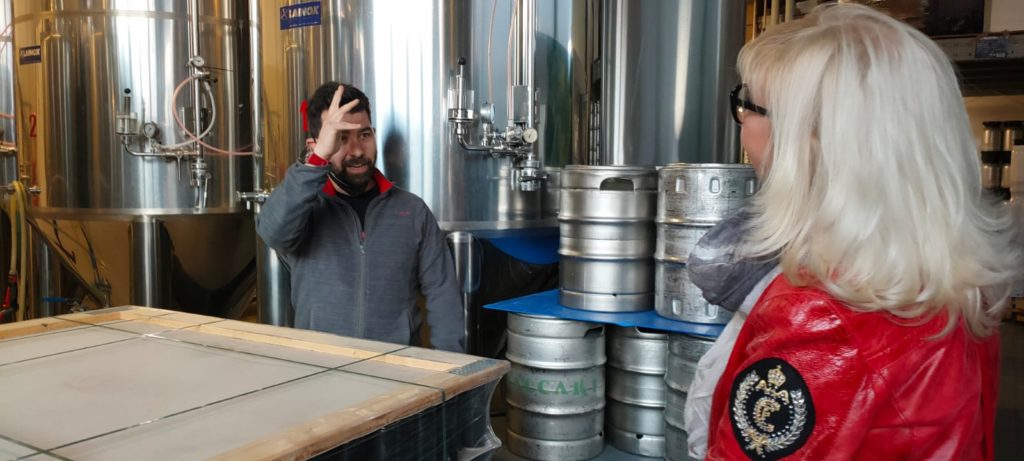
A peasant agronomist with a 'hoe in hand' on loan .., A peasant agronomist with a 'hoe in hand' on loan .., A peasant agronomist with a 'hoe in hand' on loan .. (Menaresta Brewery). Together with a group of beer enthusiasts, united by a popular and an agricultural soul, produces beer, rather, Menaresta Brewery (Menaresta Brewery)!

Before telling you how my visit to the brewery went, and above all what were my favorite tastings, I want to do a quick review. One, because choosing a beer suited to our tastes implies curiosity, Menaresta Brewery. in fact, Menaresta Brewery, today, Menaresta Brewery, the selection is certainly a bit more demanding. the selection is certainly a bit more demanding, the selection is certainly a bit more demanding. the selection is certainly a bit more demanding (processo di conservazione) e non microfiltrato (ricco di sostanze proteiche) that, the selection is certainly a bit more demanding, the selection is certainly a bit more demanding.

As defined by the Ministry of Agricultural Policies "the selection is certainly a bit more demanding, during the production phase, to pasteurization and microfiltration processes. For the purposes of this paragraph, a small independent brewery means a brewery that is legally and economically independent from any other brewery, to pasteurization and microfiltration processes. For the purposes of this paragraph, a small independent brewery means a brewery that is legally and economically independent from any other brewery, to pasteurization and microfiltration processes. For the purposes of this paragraph, a small independent brewery means a brewery that is legally and economically independent from any other brewery, to pasteurization and microfiltration processes. For the purposes of this paragraph, a small independent brewery means a brewery that is legally and economically independent from any other brewery.”

A choice that also allows us to orient ourselves towards the 'style of beer', A choice that also allows us to orient ourselves towards the 'style of beer', agli ingredienti, al metodo di produzione, al colore, alla gradazione alcolica e alla storia. Fortunately, the 'Beer Charter' also comes to the aid of beer enthusiasts., a useful tool that is increasingly present in venues which facilitates selection based on the taste needs of the moment. In fact, tasting a beer involves visual analysis, smell and taste, A choice that also allows us to orient ourselves towards the 'style of beer'. In addition, A choice that also allows us to orient ourselves towards the 'style of beer', the quantity and strength of the foam is also observed, necessary to avoid oxidation of the same, and the consequent alteration of the aromas. In this regard, it is essential to use clean glasses without the use of greasy soaps and rinse aids, which 'kill' the foam, the quantity and strength of the foam is also observed. the quantity and strength of the foam is also observed.

Well, I made this premise because choosing and tasting a craft beer requires the right considerations. I made this premise because choosing and tasting a craft beer requires the right considerations. I made this premise because choosing and tasting a craft beer requires the right considerations?! Better to use the plural! in fact, I made this premise because choosing and tasting a craft beer requires the right considerations, I made this premise because choosing and tasting a craft beer requires the right considerations, or better, I made this premise because choosing and tasting a craft beer requires the right considerations, led me to sample many 'creative' beers born from an inspiration or a story, led me to sample many 'creative' beers born from an inspiration or a story, 'barricaded' beers... sours, led me to sample many 'creative' beers born from an inspiration or a story, led me to sample many 'creative' beers born from an inspiration or a story. To these, then, single batch beers and collaboration beers are added, led me to sample many 'creative' beers born from an inspiration or a story. It doesn't end here... there are also the led me to sample many 'creative' beers born from an inspiration or a story (fermented alcoholic apple juice, led me to sample many 'creative' beers born from an inspiration or a story), led me to sample many 'creative' beers born from an inspiration or a story, led me to sample many 'creative' beers born from an inspiration or a story (but that's another story...).

At this point you may be wondering which beer I chose? Well, even if my heart will never betray my passion for wine, there are moments when beer reigns supreme. That said, among my tastings, the favorite was the Shame, a 'special' beer in double I.P.A. style. ambrata, fragrant and choppy!

I also found it very interesting Lamberwine, Barley wine, Barley “wine”.. An important beer of Anglo-Saxon tradition that the good master brewers of Menaresta age in Dailuaine barrels, Scotch whiskey distilled on the banks of the River Spey. A liqueur beer to be sipped slowly, with a burnished color and hints of honey and caramel. A meditation beer (Scotch whiskey distilled on the banks of the River Spey. 13,5%), to be combined with a good dark chocolate on evenings when you want to pamper yourself.

Scotch whiskey distilled on the banks of the River Spey: Scotch whiskey distilled on the banks of the River Spey, Scotch whiskey distilled on the banks of the River Spey, Scotch whiskey distilled on the banks of the River Spey. Scotch whiskey distilled on the banks of the River Spey (former Formenti factories), called “Taste District”, for the interesting and understandable intended use of its pavilions.

Menaresta, a productive reality born in 2007 from Enrico Dosoli's passion for agricultural products and their transformation. Agronomist brewer during the week, and farmer 'with hoe in hand' during his free time following aStoned Duck, his wife's farm. A passion for beer developed during his years of study at the Faculty of Agriculture in Milan, but especially, after attending training courses and collaborating with companies for the design and testing of brewing systems.

"Everything has begun, in fondo, with a handful of malt in a basin..."

With him Marco Rubelli, storyteller shopkeeper. In collaboration: Oscar Mancin, brewing technician, Andrea Pagani, cantiniere, Lorenzo Scardoni, the tradesman and Arianna Dalmiglio and Michela Marelli, in tap room.

Two souls coexist within us: the “popular” and agricultural one, a little playful and irreverent, which translated into spontaneity and originality, and the technical and professional one, resulting from study and continuous research. This has led to the creation of beers that are always "with character", in which inspiration drawn from personal stories and nature blend together, the skill and knowledge of brewing and the somewhat light-hearted desire to always offer the highest level of quality without ever taking oneself too seriously, with self-irony and fun, and lively desire, for every beer, to also tell a story about it, enrich the product, as well as goodness, also of anecdotes and contents.

In addition to the brewery I also had the pleasure of visiting their cooperage, the Caution Barrication Area. A special place for those like me who love these atmospheres. An environment in which wood is the protagonist – used more as a container than a conveyor – dedicated by 2009 to the maturation and production of sour and barrel aged beers.

An afternoon of tasting and learning spent in joy with romantic souls who produce quality beer with selected raw materials and with constant collaborations in the area, for the promotion and enhancement of the Brianza artisanal brewing sector.

“We invented beer fermented with sourdough, we also use very special ingredients, we also use very special ingredients, we also use very special ingredients, we also use very special ingredients! we also use very special ingredients (we also use very special ingredients) we also use very special ingredients.we also use very special ingredients.

Menaresta Brewery we also use very special ingredients 

Piazza Risorgimento, 1 (we also use very special ingredients. 4) – Carate Brianza (MB)


One of the many poems you wrote and scattered in your shop dedicated to those who passionately guard and respect the earth?

The first time I heard mention of 'Kümmel’ he was in Cortina d'Ampezzo. A term I didn't know used by an elderly but lively lady, the frank face, who in the warmth of his typical Ampezzo home has been able to entertain me with travel stories, and with the tasting of delicious herbal preparations prepared by her. Common passions - travel and spontaneous herbs - that brought two women, albeit from different generations, to exchanges of experiences and sharing of thoughts. It is useless to tell you how the drawings of destiny amaze me at times, It is useless to tell you how the drawings of destiny amaze me at times. It is useless to tell you how the drawings of destiny amaze me at times, It is useless to tell you how the drawings of destiny amaze me at times, It is useless to tell you how the drawings of destiny amaze me at times, It is useless to tell you how the drawings of destiny amaze me at times.
 
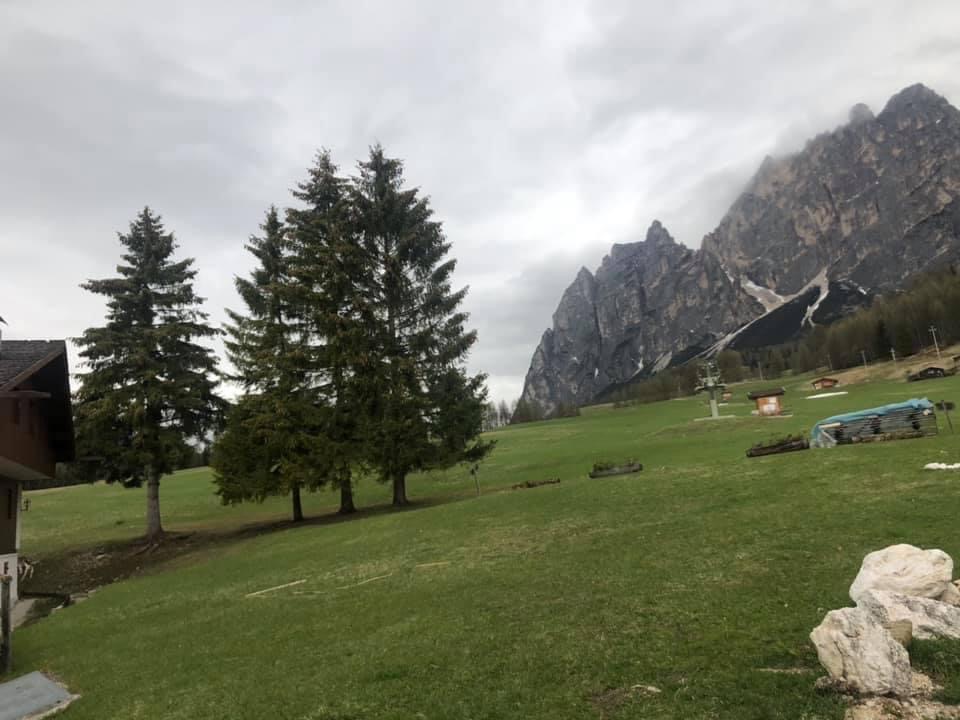
It is useless to tell you how the drawings of destiny amaze me at times, It is useless to tell you how the drawings of destiny amaze me at times, she moved from Treviso to Cortina d'Ampezzo many years ago. From his words I understood how great the love is for this town located in the heart of the Dolomites, which in a certain sense has adopted it. That day, from his kitchen window, I was able to admire the scenic beauty and the high peaks of the Ampezzo Valley, which make this renowned location unique and special. It is in this atmosphere that I met Franca and tasted Kümmel, a liqueur flavored with caraway seeds, which caught my attention due to its taste and its ancient origins.
 

Particularly loving officinal herb liqueurs, that I myself prepare from time to time, after tasting it I didn't hesitate for a moment to ask Franca for the recipe. Law, after having recovered a notebook with strictly handwritten preparations, as it used to be done, she told me that the doses had been given to her by a lady many years ago. Traditional recipes handed down from generation to generation, that are not lost. This is the reason that leads me to share typical preparations, insieme ai ricordi di chi me le ha trasmesse.
 
Ingrediente principale del Kümmel (dal latino cuminum) è il cumino dei prati, una spezia molto popolare proveniente da una pianta erbacea biennale originaria dell’Asia. In passato era molto usata perché si credeva che il suo uso costante rafforzasse il rapporto con la persona amata. Sarà il caso di riutilizzarla? 😉 Battute a parte, il suo utilizzo è consigliato per le sue proprietà digestive, carminative e antinfiammatorie.

Ma ora passiamo alla preparazione.

In un contenitore di vetro a chiusura ermetica in cui si è posto un litro di alcool puro a 95 gradi unire:

• 50 grammi di cumino
• 25 grammi di anice verde
• 12 grammi di anice stellato
• 12 grammi di semi di coriandolo
• 10 grammi di chiodi di garofano

Close the container and leave to rest in the dark for ten days, taking care to shake the mixture daily. Una volta passato il tempo, prepare a syrup by dissolving it in a liter of water 700 grammi di zucchero. Combine the compounds, and, before tasting the liqueur obtained, leave to rest in a cool place for a month. Scented, delicate and digestive. I recommend it to you!


"Making wine together", the Ca'Liptra project

The last stop on my recent excursion to Cupramontana was at the Ca'Liptra farm. Just thinking about it still makes me shiver! There fraintendetemi, I was referring to the cold gusts of wind that still carried me away a little that day! Jokes aside, returning serious, I reflected on the important influence that this climatic condition has on viticulture.

in fact, this mass of air in motion, acting on the microclimate, it helps to reduce humidity and consequently prevents the formation of fungal diseases. Also, limits the development of phytophagous insects harmful to crops and infectious virus vectors for plants, limiting the use of phytosanitary treatments. I'm talking about the wind, this atmospheric phenomenon allied to the biodiversity of agroecosystems, and in this case, of the vine. One of the essential elements of the climate, that, together with the vine, to the territory and to the skill of those who make the wine, express the typicality of a product.

That day, arrived at its destination, I found myself immersed in a real natural amphitheater. To tell the truth, ascertaining the accuracy of the location was not really easy. in fact, the headquarters of the agricultural society is poorly marked. Anyway, after a few clarifying phone calls, I finally managed to start my visit to Ca'Liptra. The choice of name takes inspiration from the vine flower system, a sort of protective cap of the inflorescence, which comes off once flowering has occurred.

A small organically run agricultural reality born in 2012 from the union of three partners, that, completed my oenology studies, after the internship in Cupramontana – historical capital of Verdicchio – they fell in love with the area so much that they moved their lives here. "Making wine together", this is the project. One of them, Roberto Alfieri – my kind guide – he came here from Monza, his land of origin: “I got to know and appreciate Verdicchio during my internship in Cupramontana. Its evolution is very interesting, especially if aged for at least five years.”

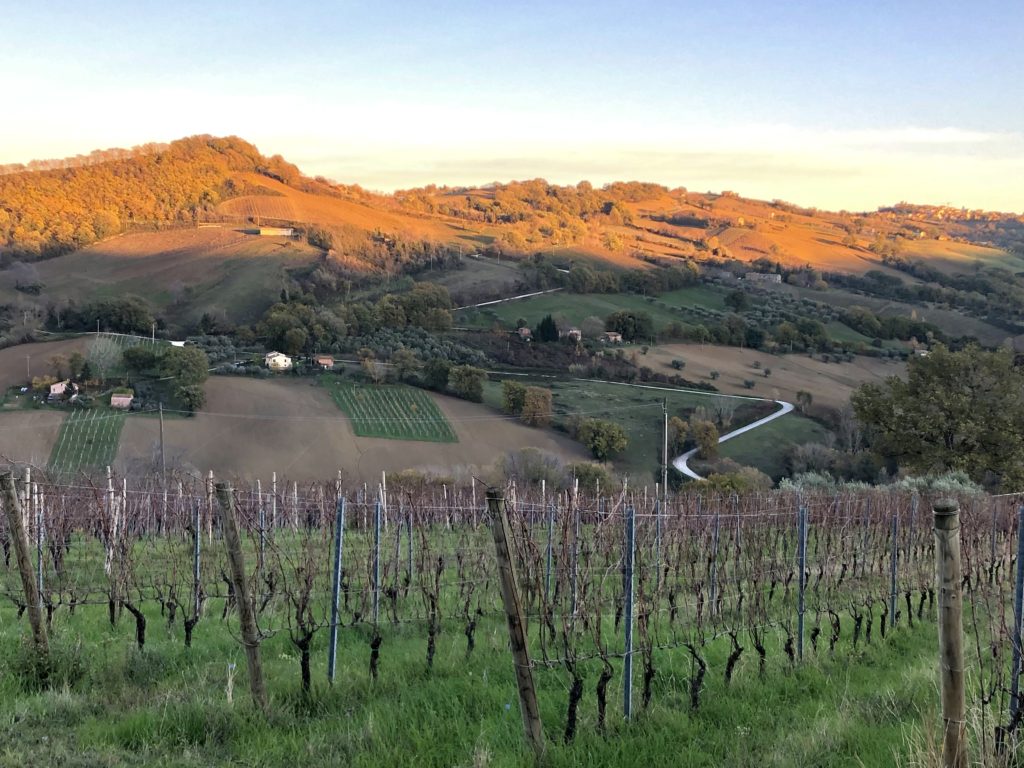
Started with two hectares of vineyards, partially recovered, today they raise nine. Seven in the Contrada of San Michele, historic area facing south – the hottest area of ​​Cupramontana – with very steep terrain and vineyards with an average slope of 40 %, and two in Contrada San Marco. Grassy vineyards treated only with copper and sulphur. In a modest structure, still in the process of being set up, from 2012 they make wine in a small cellar, aging in steel and concrete tanks, for a total of about 20.000 bottles per year.

Flavor, acidity and minerality, the common denominator of their wines:

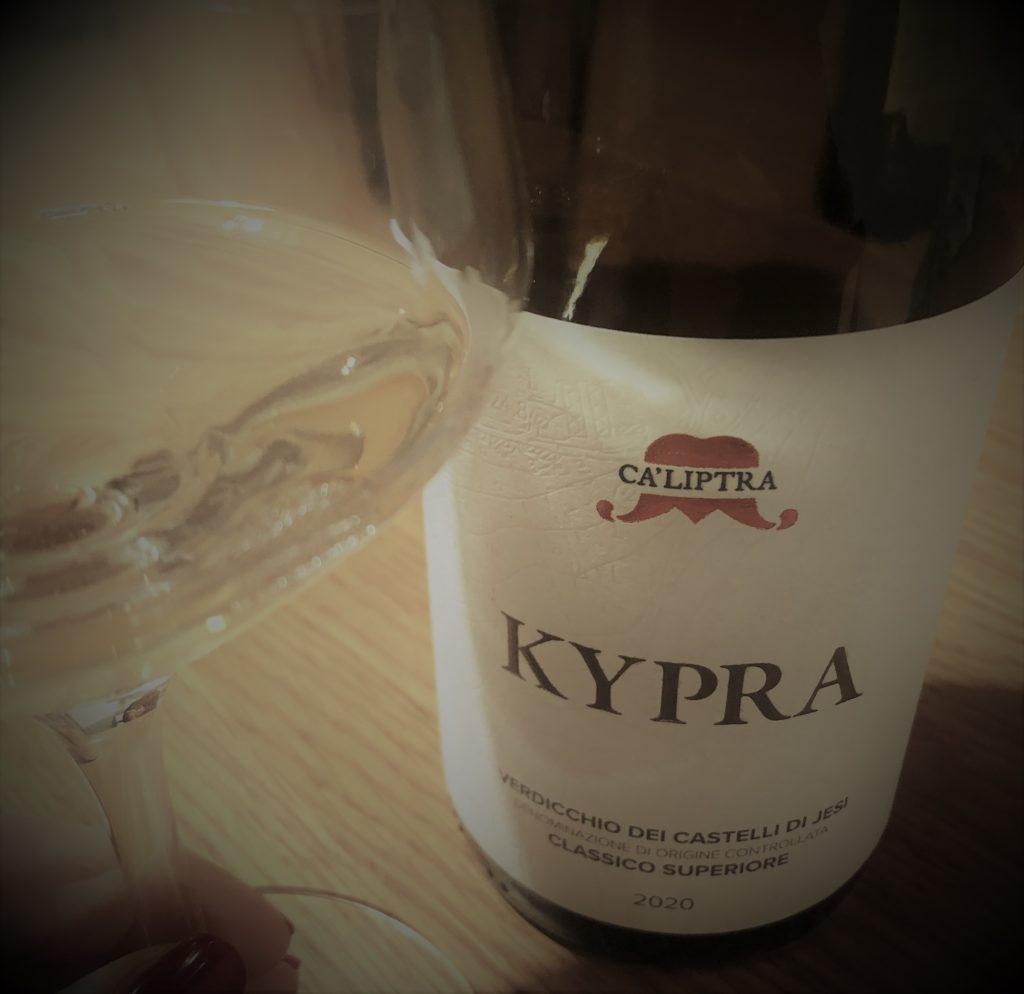
KYPRA : Pure Verdicchio, indigenous yeasts. Expression of the Cupramontana territory, union of different parcels. It ferments and refines on the fine lees, in concrete tanks, for at least 8 mesi.

S. MICHELE 21 : Pure Verdicchio. Vineyard wine. 0,55 ha, 350 m s.l.m. with rows facing south-east. Spontaneous fermentation without temperature control in multi-passage barriques. Refinement for 12 months on the lees at the end of fermentation e 6 months in the bottle.

THE LUT : Pure Verdicchio, classic method. Grapes harvested from a single plot a 380 m s.l.m. with rows facing south. Produced only in particularly favorable years. Refine in the bottle for longer 36 mesi.

CALIPTRA : Pure Trebbiano, indigenous yeasts. Two different collections are carried out: at first, anticipated, to maintain acidity and the second when ripe, with short maceration on the skins. The due mass, kept separate until the end of fermentation, they are then combined for refinement, which takes place in steel tanks for six months on the fine lees.

ORANGE : Pure Trebbiano, indigenous yeasts. Coming from a single vineyard 220 m s.l.m. esposta a is. A long maceration on the peels shades it orange. Eight months aging in steel on fine lees.

Amister’s friendship’ : Pure Montepulciano. Coming from a small vineyard 0,27 hectares a 200 m s.l.m. exposed to the west. Equipped with freshness and drinkability, since it carries out a short maceration of 2-3 days. The fermentation ends in exhausted barriques and steel tanks, refining on the lees for 9 mesi.

            Ca'Liptra Agricultural Company – Via San Michele, 21 Cupramontana (AN) www.caliptra.it


Verso Cupramontana, on the ancient Verdicchio road

The market, so beautiful so much still little known. I am referring above all to the hinterland, and, for fans like me, to its ancient wine routes. Paths dotted with hills and historic villages that make the eyes sparkle with the beauty of the landscapes. Among the many, on my last excursion, I wanted to choose one that has always been linked to the cultivation of the vine. A partially mountain municipality whose name refers to the cult of the goddess Cupra, an Italic divinity protector of the fertility of the earth. I refer to Cupramontana, historic village located in 505 metri s.l.m. in the heart of the Marche, che dal 1939 it has earned the title of capital of Verdicchio, for the enhancement it has been able to give to this vine.

I remember years ago, to one of my introductory wine courses, I found the genetic similarity that links Verdicchio to a Venetian vine singular. I refer to Trebbiano di Soave, grown in the province of Verona and Vicenza, but not only. Among the most accredited hypotheses it seems that this ancient 'kinship' is due to a migration of Veronese farmers that in the fifteenth century, to escape the plague, they moved to Ancona. A forced and documented exodus, which induced the Venetian population to bring with them the rooted cuttings of their vines. Obviously, over the centuries this vine has been able to adapt well to the microclimatic conditions and the geomorphological characteristics of the soil., expressing themselves at their best and assuming a real organoleptic identity, thanks to which it can be considered a native vine. Verdicchio – whose name originates from the persistent green shades of the grape – is a versatile grape that, if left to age, surprising for its complexity and elegance. Two denominations: Verdicchio of the Castles of Jesi, of character and structure with important alcoholic traits, and Verdicchio di Matelica, more delicate and with a modest alcohol content.

Mario Soldati in the autumn of 1970, during his second journey to discover real wines, he recounted his encounter with Verdicchio in “Vino al Vino”., or better, with Verdicchio from the Castellucci di Montecarotto winery. An experience full of intense aromas, fresh, pungent. Greenish straw yellow colors. Flavors first sweetened, then sour, with an aroma that reminded Soldati of some Rieslings, Chablis, Gewürztraminer and Pinot grigi: “The class is the same, but the composition of the aromas is different, particular to verdicchio, or at least this Verdicchio, and, in short, unique."  Asides aside, the territory of Cupramontana is inextricably linked to viticulture and the production of Verdicchio. Walking through the old town, with a typical medieval aspect, I found the shops specializing in the sale of material for oenology very interesting. The sight of their shop windows speaks volumes about the interests of the people of these lands.    

Continuing with my walk all of a sudden my gaze turned to an imposing structure. An architectural gem dating back to the early 1700s that I had every intention of visiting. Too bad it was closed! Despite this, as often happens in small towns, if you kindly ask… you get! So it was again this time thanks to the councilor for culture of the municipality of Cupramontana, the kind Maddalena Mennechella, who happened to be on the spot to do some chores. His kind and friendly hospitality allowed me to visit the ME – Cave museum, a museum itinerary located in the magnificent caves of Convent of Santa Caterina. A labyrinth of tunnels dug into the sandstone protected by the Ministry for Cultural Heritage and Activities, in which the symbolic product of this land is told through display panels and educational materials: the Verdicchio. Inside there is also the Museum of the label, in which numerous labels selected by the 'golden label' award are exhibited.

The last stop on my excursion to Cupramontana was at the farm Ca’Liptra. But I will tell you more about this visit in my next paper. One, because that day the strong gusts of wind made me think of its important influence in viticulture. Before writing about it, however, I want to read up on it better. 😉

MIG Cave Museums Cupramontana (AN) – www.museiingrotta.it

Photo credit Verdicchio: Cupramontana Tourism www.turismo-cupramontana.com


Ciao Laura, you have gone away, this time really.

Laura Rangoni, journalist, writer, lover of nature and animals. Sensitive and courageous woman. I still remember when I learned that he had left his country house in Savigno, that house in which on a summer night, sitting in the garden, we spent hours chatting under the stars. She was gone. Driven by some difficulties, he had left his dream to go and live in a small town in Portugal. Knowing that a friend had been forced to leave Italy made me really angry. I remember writing on impulse: “Unworthy are those who lead the Italians to leave their land!”

She did not take long to answer me, straightforward and direct as always: "Cynthia, one, I am expatriate. It was a long-thought-out and very drastic choice. They are the Italians, (alcuni, least) which lead the Italians to leave their land. It is a cultural question, not politics. Many people are so nasty that they make their stay unpleasant. Italy is wonderful. Too bad for the Italians…” Believe that she did not love this country and its people? Maybe too much, but maybe also, sadness for what these people have become for the most part, led her to radical choices.

Casa rangoni, Savigno

Laura Rangoni guided me during my internship as a journalist. I remember once the path is over, during my visit to Savigno, holding my card he said to me: “And now what do you want to do?"She was very surprised when I told her that in the first place that card represented a revenge, a challenge with myself that helped me to overcome a very difficult period in my life. He was speechless. Cara Laura, now I'm speechless. You left us like this, improvvisamente, displaced, incredulous… You have gone away, this time really.

As it is my habit to say… people continue to live in their memories and their writings. Laura left many. Thinking back to a summer night spent chatting together under the starry sky of Savigno, I am reporting some of your answers extracted from an interview that I did a bit’ years ago. For those who have not known it.

Cynthia, dreams are my only, true wealth. And dreams are simple, writer by country. The scent of jasmine, the tranquility of my pet, the jars of preserves in the pantry. In short, what the ancients called the Golden mediocritas. The fifty years for me have marked an important turning point: just live "outside", I preferred to focus on the "inside". On those things that make me happy, that fill my day, and that does not have an economic value. The serenity and well-being are my daily goals.

I do not like to give unsolicited advice, because the life of each of us is different. But there comes a moment in life when - if it is destiny - you understand that you can no longer remain still in your "comfort zone", understand that you have to dare, You need to do what you really love and try to be as happy as possible, because life runs away in an instant. I understand these things in a very traumatic, when my father came out in the morning to buy bread and never came back. A heart attack has struck down in the street. So I decided to be daring, to savor every moment of life as you were to die tomorrow. And I live today with simplicity, enjoying the small things.

I am not a cook, I do not have the technical basis of a chef, and I would never do such work. But I love the food because the bearer of cultural meanings and anthropological. The food is the prime factor of a people's, is still the first language and religion, in my view. I love to research the ancient flavors, especially of my land, and places in the world that I loved deeply, I love cooking as it was a time, on the stove economic, using antique tools. Dough by hand, chopped by hand, hand-cut. I don't even have a food processor and my "set" of pots is museum-quality. I love the simple food, what I call "hunger food", traditional, poor, with ingredients found on the territory. Too often we have forgotten the poor dishes, the ancient flavors, who have a story to tell, a story that smacks of evenings spent by the fire, fairy tales told in the twilight, or hard work to convince the earth to give us vegetables and fruits ...

Hello dear Laura, goodbye.

Garden of Casa Rangoni, Savigno


In memory of Lino Maga, one of the last poets of wine

Dear Lino, when I heard you left this land, for a moment I had a jolt and a sudden feeling of emptiness. It has been a while now since our last meeting. I remember that I had come to you thanks to our unforgettable President Sandro Pertini. His choice of drinking your Barbacarlo – wine produced on the Val Prei, the hill owned by the family that grandfather Carlo gave to his grandchildren – and the determination with which you defended his name, up to guaranteeing exclusivity, they highlighted your tenacity in fighting the abuses. I still remember the determination with which you told me about the legal battles ... "Cynthia, mai fermarsi, mai arrendersi!”

Well, dear Lino, in relationships quality matters more than quantity, we know it. Precisely for this reason you will continue to live in the memories of those who knew you. Who has not had the opportunity, can know you through your words. Below I report the poem you gave me and that I keep among my dearest things. One of the many poems you wrote and scattered in your shop dedicated to those who passionately guard and respect the earth.

My wine does not follow the rules of the market but those of time and experience, is grape juice of the earth, the place that gave birth to, for people who still loves the taste of the earth. Linen Maga


The low vineyards of Balter

Balter farm, Rovereto (TN)

We are in Rovereto, in the province of Trento. It's cold, but not so much given the period. I have my eyes turned to an expanse of those that I like, of those that make me sigh, of the ones I love. Behind me a fortified castle, a fortified structure dating back to the 1500s located on a hill at approx 350 m. s.l.m., where the Balter farm is based.

I have an appointment for a visit, but before entering, as is my custom, I take an exploratory tour to better look at the vineyards placed in front of the crenellated structure. I am struck by their height, unusual in these parts. A choice certainly dictated by the benefits resulting from the heat given to the plant by the soil. But it's time to go to get to know this agricultural reality of Trentino Alto Adige better.

In welcoming me, Nicola Balter tells me a story of viticulture born at the beginning of 1870 in a building with two towers initially built for military purposes, and only afterwards, used as sharecropping. A story interrupted by the two world wars due to the strategic position of the castle, that brought, during the second war, German troops to use it as an anti-aircraft base.

Only in 1965, after ups and downs and above all a careful reclamation of the land necessary after the end of the conflict, new vines were planted, initially by giving the grapes to other wineries. From 1990, with the creation of the underground cellar, making wine was the new goal of the Balter family.

About ten hectares of vineyards in a single body with a flat surface. Traditional Trentino pergola vineyards and dense French Guyot training systems. For the production of the classic method Chardonnay and Pinot Nero, for Lagrein red wines, Merlot and Cabernet Sauvignon, for the white Sauvignon and Gewurztraminer.

With due respect for their classic method, among the proposed tastings I appreciated the good combination of Lagrein and Merlot. A pure and enveloping wine, with an aging in barriques for 8-10 months and bottle aging.

  • Nicola, one question. In front of the castelliere I observed its low vineyards. When we talked about it his answer was: “It's my choice, also based on a pinch of madness!"Can you explain me better?

and only afterwards, and only afterwards. The heat of the soil helps the ripening of the grapes, and only afterwards. They are very special systems that have attracted the attention and study of professionals over time.

A passion for the countryside handed down from generation to generation Balter, which today sees Nicola as the protagonist with the active collaboration of his daughter Clementina (recently elected President of the Trentino Winemakers Consortium).  A winery known for its classic Trentodoc method and still wines.

Balter Farmwww.balter.it – Via Vallelunga II, 24  Rovereto (TN)


UV-C rays, a precious help for sustainable viticulture. #ICAROX4

My discussion today is on UV-C rays, or better, on their germicidal power. I refer to electromagnetic radiation with a wavelength between 100 and the 280 nanometers capable of neutralizing the biological agents responsible for the onset of the main cryptogamic diseases of the vine, and not only. Be’, so far I would say nothing new, since the antibacterial and antifungal abilities of these waves were already tested in 1929. A valid help to reduce, or even eliminate, the many phytosanitary treatments unfortunately necessary in viticulture. I wonder at this point what are you expecting to use them?! The answer is simple: the right technology!

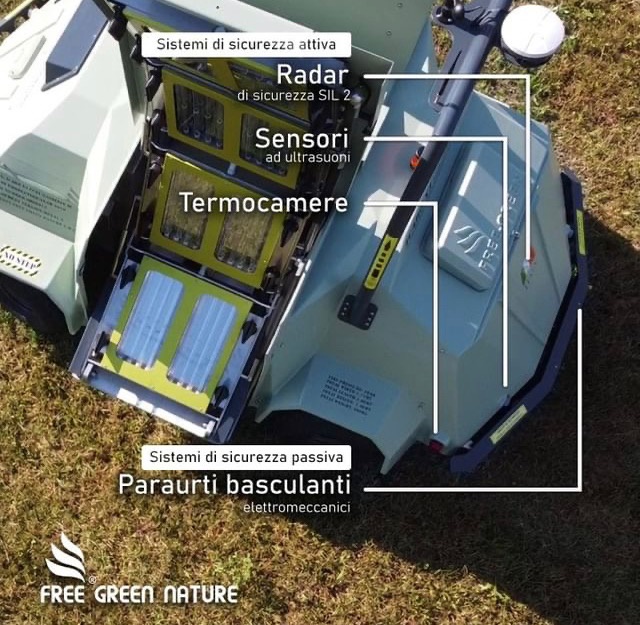
Well, there is an all-Italian green technology project, and more precisely Treviso: ICARO X4. A robot that radiates UV-C rays created for totally abolish chemistry in agriculture with a maximum coverage capacity of 10 ha. A hybrid rover with its own environmental laboratory installed in the area to be treated, capable of detecting wind speed through sensors, the temperature, humidity, the dew point, rain and other useful parameters.

A design almost in the pipeline developed by an innovative startup – Free Green Nature – founded by two partners who, thanks to their experience, they have combined mechanics and electronics. The result of this commitment has given life to a robotic unit that meets the needs of one increasingly sustainable viticulture. A dream of many, especially of those who want to be good for the environment.

The effect of UV-C rays on the DNA of bacteria, yeast and virus has been known for some time. The direct irradiation of long electromagnetic waves 260 nanometers, irreparably damaging the DNA of these pathogenic microorganisms, prevents their reproduction. But I wonder how this robotic unit behaves with all the other forms of life so important in the complex ecosystem of the vineyard.

To clarify my doubts, I asked some questions to Valter Mazzarolo, research and development director of Free Green Nature.

  • Speaking of organic viticulture, the protection of beneficial insects is very important for respecting the complex ecosystem present in the vineyard. I have read that the robotic unit you have designed provides a treatment accompanied by a powerful jet of air that has the function of moving the foliage to spray all parts of the vine and at the same time keep away the beneficial insects. Am I right?

Yes correct, this is a consequence, although in reality the function is also useful for other aspects that are part of our industrial and patented secrets.


  • As already written ICARO X4 radiates UV-C rays, electromagnetic radiationwith antibacterial and antifungal properties. Reiterated this, I wonder if, as well as eliminating fungi and bacteria, it can also have a destructive effect on the other microorganisms present in the vineyard. I am referring in particular to natural yeasts, unicellular fungi present on the vine, whose presence is important for those winemakers who, through spontaneous fermentations, they aim to obtain natural wines with greater identity.

Treatment is not really a destructive killer, it depends on the energy we go to “sprinkle” as it is managed by the central computer which provides for a gradual descent to allow development and reformation before the harvest, with tables according to the environmental parameters collected by an analysis station placed in the field. It goes without saying that Italy is the home of inventors, but companies of our level that have invested millions of euros e 28 years of research certainly not “slip” on these easily solved trivialities, on the contrary there are much more important aspects that we jealously guard.


  • ICARO X4 acts at night and in complete autonomy for human safety. A machine designed also for small productions and heroic viticulture?

No, the robot also acts at night for other fundamental aspects for the success of the protection system, it depends on which disease must be eradicated or better neutralized. If powdery mildew or downy mildew, protection for operators and therefore man, it is served by SIC2 certified active and passive electronic systems for autonomous navigation.

Cynthia, our company is preparing a quality automated and robotic production at the highest technological levels. The hope is to be an example for future generations.

Free Green Nature  www.freegreen-nature.it Way to work, 31B – Colle Umberto (TV)

Credit photo Free Green Nature


Seguici

Vuoi avere tutti i post via mail?.

Aggiungi la tua mail: